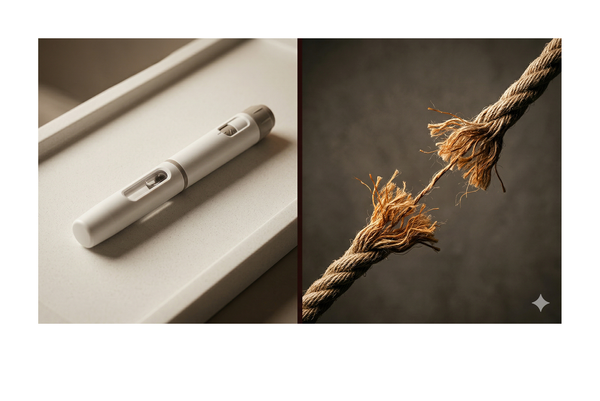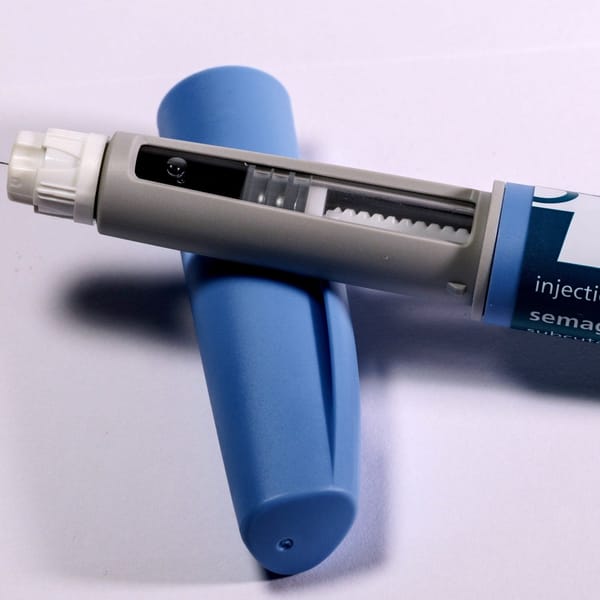
The Scan Was Fine. It Was Just the Wrong Leg.
Real Madrid’s alleged MRI mix-up involving Kylian Mbappé is more than a football story. A sports medicine physician unpacks the science of wrong-side imaging errors, why they happen, why they’re underreported, and why the most underrated safety mechanism in medicine is you.

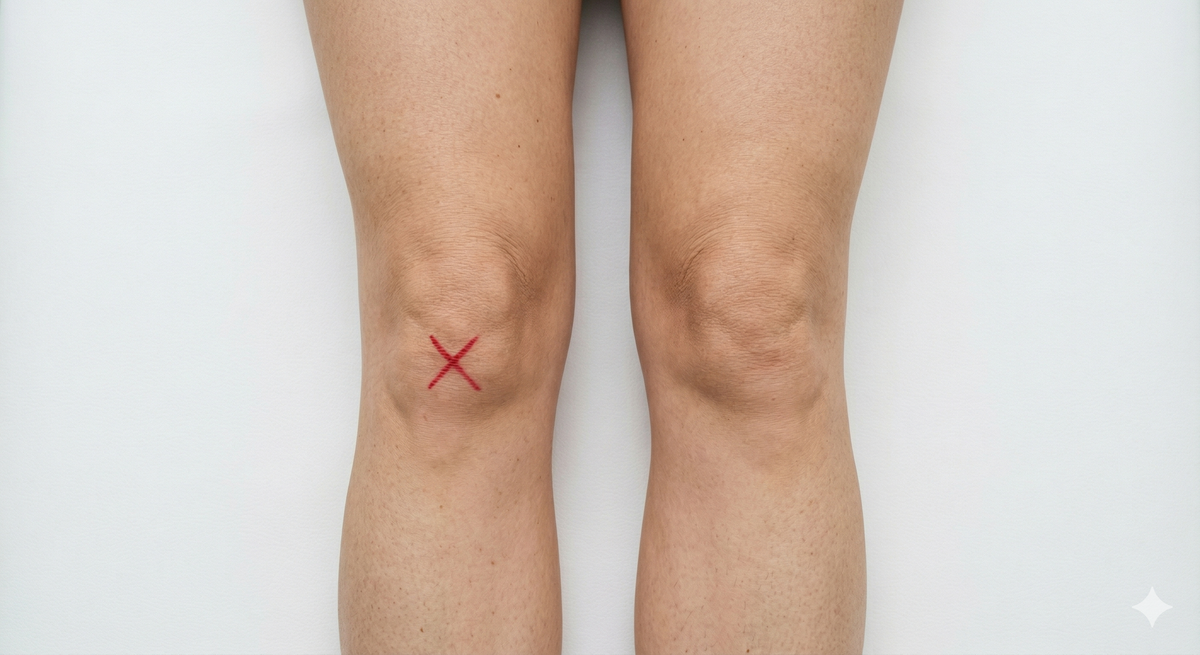
The world’s most valuable footballer. The best medical infrastructure club football can buy. And allegedly, the wrong knee.
Reports from The Athletic and RMC Sport claimed that Real Madrid’s medical team scanned Mbappé’s healthy right knee instead of his injured left following a knock in December. He has since dismissed this as “baseless.” Still, the story has ignited a question that matters well beyond the Bernabéu: How does a "wrong-side" error happen to the world’s most valuable player?
A Legacy of Error: From "Freak Accident" to System Failure
The history of wrong-site surgery (WSS), operating on the wrong side, the wrong organ, or even the wrong patient, is one of the most sobering chapters in modern medicine. Historically, these were treated as freak accidents caused by individual negligence. But the data suggested something else.
In the late 1990s, WSS was estimated to occur in roughly 1 in 112,000 procedures. That was likely an underestimation, though. Back then, reporting was voluntary, and as you might expect, surgeons weren't exactly rushing to air their dirty laundry.
So, when a 2005 survey found that 25% of orthopaedic surgeons reported performing at least one WSS during their career, it was pretty clear that we were only seeing the tip of the iceberg.
Everything changed in 1995 following the wrong leg amputation of Willie King in Florida. This tragedy forced the medical community to stop blaming individuals and start looking at how to address the bigger picture. The system.
Wrong-Side Imaging: The Under-Reported Error
WSS were quickly designated as "Never Events", a term now used globally to describe errors so egregious and yet preventable that they should, in theory, never happen. Wrong-side imaging, on the other hand, has been more elusive.
Errors that happen in the process of imaging often go unreported. Part of the reason is straightforward: if the wrong limb appears healthy on the scan, and the reporting radiologist’s findings don’t contradict what the patient describes, the error may never get flagged. Even if they did, the wrong-side event may still not get reported.
What commonly happens, though, is that the error is caught by the technician just before the scan. Or, the patient corrects the technician at the last moment. A near-miss event.
The evidence available suggests that "wrong-patient or wrong-imaging" errors in radiology happen at a rate of approximately 9.4 per 100,000 examinations. That figure falls to 2.9 when a "Safety-Stop", a simple two-person verification step (the imaging equivalent of a surgical "time-out" or a pilot's pre-flight checklist), is introduced.
Good Doctors, Bad Systems?
So, you might be thinking: Surely, the player and the doctor know which leg hurts? And you would be right. But medical errors are rarely about a lack of knowledge; they are almost always about system failure.
From the moment your doctor writes a request to the moment a radiologist reports on your scan, there are multiple handoffs. Each one a potential point of failure.
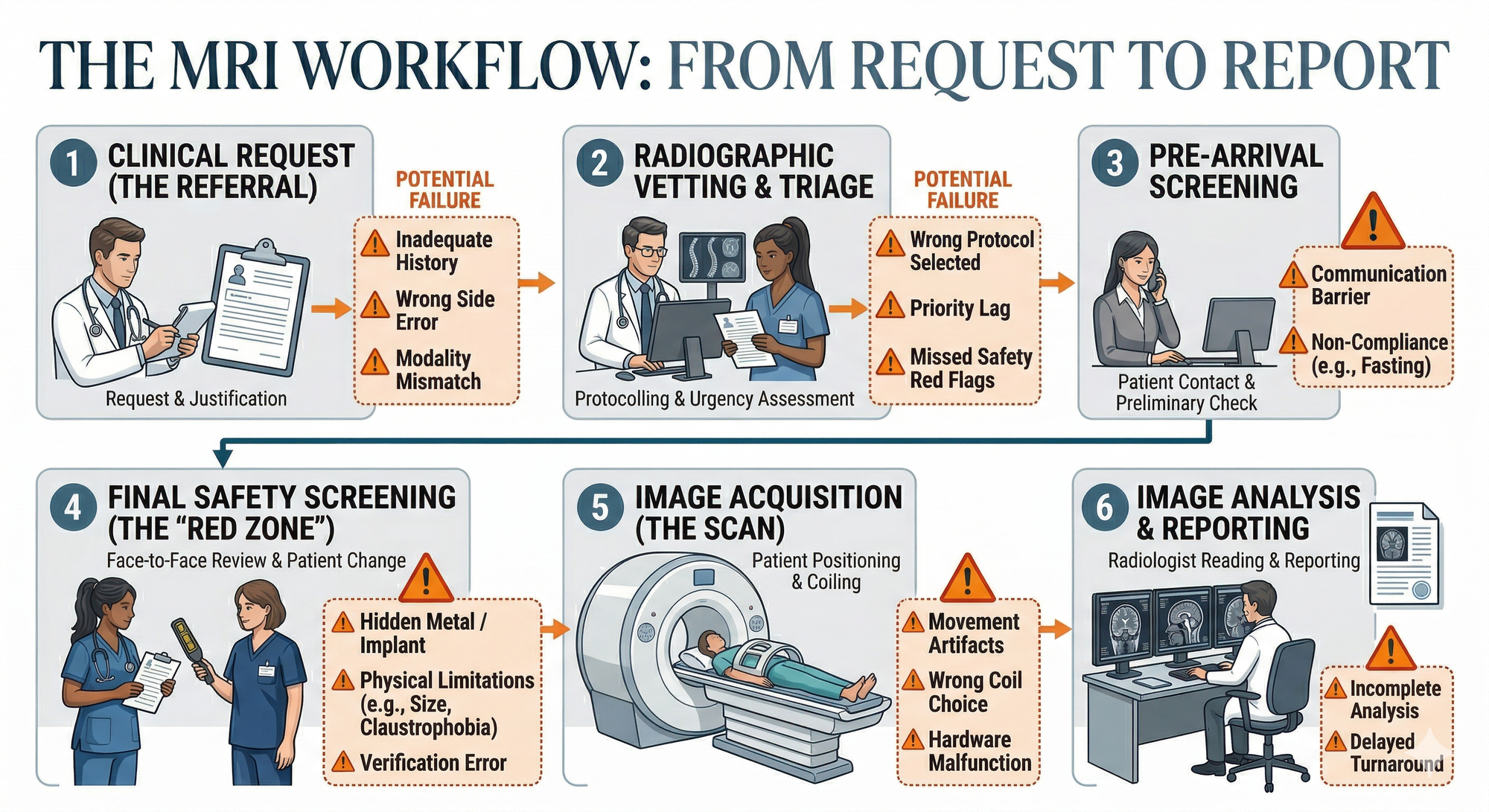
Upstream ordering errors are perhaps the most counterintuitive. If a referral contains a typo specifying the wrong side, the radiology technician is legally obliged to follow the written request, even over a verbal correction from the person in the room. The paperwork outranks the person. Of course, they can pause to check with the referrer before proceeding.
Cognitive bias, or framing, is subtler. In the arena of professional sports, if a player is known to have a history of right-sided problems, a busy medical team may unconsciously interpret a new injury through that same lens assuming, without checking, that the right side is again the culprit. Nobody is being careless. The brain just does what the brain does.
The elite athlete pressure. Then there's the high-stakes environment effect where a quick turnaround is needed. The radiology "Safety-Stop" process designed specifically to prevent this type of error can get compressed creating an opening for blunder.
The Hidden Cost of a Missed Scan
A wrong-side MRI won't physically harm you the way a wrong-site operation can. But a delay in diagnosis carries its own cost whether you're a €200M footballer or a weekend runner.
- Compounded Injury: Clearing someone to continue competing on an undiagnosed injury can turn a minor problem into a season-ending condition.
- Recovery latency. In the world of a "Galácticos," recovery is measured in hours. A one-week delay in identifying an injury is a one-week delay in starting treatment, rehabilitation, or surgery.
- Wider impact. Then there are the wider ramifications that impact beyond the individual: the star player missing crux games that can affect the team's season. The effect on ticket and merchandise sales and betting forums. It's endless.
Be "That" Patient
Whether it’s a scalpel in Florida or a magnetic coil in Madrid, the most advanced technology in the world is only as effective as the safety-stop that ensures it’s pointed at the right target.
With that said, the most underrated safety mechanism of all is YOU. The patient. Any clinician who regularly examines patients in multiple positions will have experienced that moment when the patient quietly corrects them as they reach for the wrong limb.
Don't be embarrassed to be "That Patient." When you’re on the table, confirm the side of the injury with the technician one last time.
Mbappé's Unexpected Lesson
And as for Mr Mbappé - he’s back. He scored the opener in France’s 2-1 win over Brazil, which feels like the right ending to this story.
Whether the full details of what happened in that Madrid scanner will ever come out is another matter, but what he said publicly is worth noting. He didn’t deflect blame. Instead, he acknowledged that his own silence had created the conditions for speculation:
"I may be indirectly responsible. When you don't communicate, everyone jumps at the chance to fill the gap."
As a doctor who spent years working in professional sport, I found that admission quietly significant. He didn’t have to say it, but in doing so he shielded a medical team that may never be able to tell their side of the story.
In a world where medical errors are so often met with blame, deflection, or silence Mbappé demonstrated a masterclass in professional grace.
Sources:
- Fox Sports: Mbappé responds to reports of medical blunder (March 26, 2026)
- The Athletic: Real Madrid and the Mbappé Medical Mystery (Subscription Required)
- Meinberg et al., Wrong-site surgery: a preventable complication, JBJS 2003
- Kwaan et al., Incidence, patterns, and prevention of wrong-site surgery, Archives of Surgery 2006
- Eva Ilse Rubio et al., Time-Out: It's Radiology's Turn, AJR 2015
- NHS England, Provisional Never Events Report, April–November 2025
- ST Canale, Wrong-site surgery: a preventable complication, Clin Orth Rel Res. 2005